| |
FIG PUBLICATION NO. 86
STDM Conceptual Model in Action: Towards Bridging Tenure Gaps to Meet Global Land Challenges
FIG GUIDE
March 2026
Main Editor: Eva-Maria Morscher-Unger
Authors: Eva-Maria Morscher-Unger, Jaap Zevenbergen and
John Gitau
FOREWORD
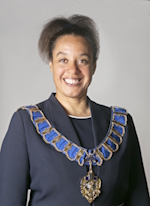
By Diane Dumashie,
FIG President (2023-2026)
|
The Social Tenure Domain Model (STDM) represents a significant
and successful collaboration between FIG and GLTN/UN-Habitat. This
publication examines the evolution of STDM and its growing role in
addressing global challenges such as food security, housing rights
for displaced populations, migration and climate resilience.
The Model has evolved as a
transformative response to these global challenges, offering a
flexible, inclusive, and innovative approach to understanding the
people to land relationships. By applying the continuum of land
rights, as developed by the Global Land Tool Network (GLTN) the STDM
addresses shortcomings in Land Administration Systems to recognise
the realities of informal and customary tenure. The recordation of
these legitimate rights has contributed to poverty reduction, gender
equality, and environmental sustainability.
|
The journey of STDM, as documented in this publication, is one of impactful
partnership working. In the early years of GLTN (2006 -2010) STDM was
developed as a multi-partner pro-poor land tool in support of sustainable
land management. It was seen as the key tool for implementing the GLTN
foundational concept of a “continuum of land rights” and presented in the
joint FIG/GLTN publication (FIG Pub. 52, 2010).
Now, after 15 years, this publication provides an insight into the further
evolution and use of STDM including its integration with the Land
Administration Domain Model (LADM), which is recognised as a normative annex
in the ISO standard, a significant milestone. Moreover, this integration
enables the direct use of STDM-based information within national land
information systems, thereby broadening the scope and impact of STDM on
pressing global issues. Furthermore, the publication also outlines the
possible pathways for aligning the STDM Model with the UN-GGIM Framework for
Effective Land Administration (FELA).
At the heart of STDM’s success are partnerships and capacity-building that
initiates and empowers local communities, governments, and professionals.
Notably, the STDM model has been used successfully within the FIG Volunteer
Community Surveyor Program (VCSP) providing the opportunity for young
surveyors to engage and foster collaboration in the fieldwork of recording
customary and informal land rights.
STDM distinguishes itself through its adaptability and inclusivity, proven
its value in diverse contexts, from urban slums and rural communities to
post-conflict and post-disaster settings. Its ability to enhance tenure
security for marginalised populations is particularly noteworthy. Such
recordation of legitimate land rights is the foundation for adequate
housing, improved living conditions, agricultural productivity, and the
resolution of land disputes.
Looking ahead, the future of STDM depends on its ability to scale and
sustain implementations while remaining inclusive and adaptable. Advocacy
and awareness efforts, both nationally and globally, alongside robust
governance and financial sustainability are essential to drive adoption and
ensure that STDM reaches those who need it most.
The authors from Kadaster International, the University of
Twente, NL and the GLTN secretariat are to be congratulated with
providing this insightful publication, with contributions from the wider
community.
This publication stands as a testament to the power of collaboration,
innovation, and community-driven solutions in the pursuit of sustainable
development. It is hoped that this work will be widely used and that the
evolution and adaptability of the STDM Conceptual Model continue for decades
to come.
Diane A Dumashie
FIG President (2023–2026)
Foreword
by Ombretta Tempra, Chief, Land, Housing and Informal
Settlement Section, Global Solutions Division UN Habitat

|
In many developing countries, tenure insecurity persists not because
people lack legitimate land rights, but because systems for
recognizing, recording, and protecting those rights still fail to
reach the communities that need them most. With much of the world’s
landholdings still undocumented, millions remain excluded from legal
protection, which weakens their access to basic services and the
full enjoyment of economic opportunities that derive from secure
land and property rights. UN‑Habitat’s 2026 – 2029 Strategic Plan
recognizes the significance of this correlation, noting that
adequate housing cannot be achieved without secure land rights and
that tenure insecurity aggravates an already severe global housing
crisis.
|
The Social Tenure Domain Model (STDM) was created more than a decade ago as
an innovative and practical approach to document the full spectrum of
legitimate people‑to‑land relationships as envisioned within the continuum
of land rights. Since then, it has matured into a robust model and
information tool used across diverse contexts, helping previously excluded
groups gain recognition within land administration systems. As one of GLTN’s
flagship tools, STDM acknowledges that legitimate rights extend far beyond
what is formally registered, and does so in ways that are inclusive,
affordable, gender‑responsive, incremental and therefore scalable.
Its use across informal settlements, customary areas, and crisis-affected
fragile settings in Africa, Asia‑Pacific and the Arab region demonstrates
that STDM does more than document land rights. It also creates space for
meaningful dialogue by bringing together communities, local authorities,
traditional leaders and governments to address tenure issues, resolve
disputes and shape more responsive land-related policies and laws.
This publication comes at a time when global priorities are shifting, making
STDM even more relevant. Food security demands stronger recognition of
smallholder and women farmers’ land rights. The climate crisis requires data
and tools that help communities adapt and manage risks. Displacement and
conflict continue to uproot millions, underscoring the urgency of protecting
Housing, Land and Property (HLP) rights. Globally, the adoption of STDM as
an annex to the revised ISO Land Administration Domain Model (LADM) elevates
it from an alternative approach to an internationally recognized pathway for
inclusive land administration.
These priorities reflect GLTN’s commitment to securing land rights for all
and align closely with UN‑Habitat’s Strategic Plan, which places housing,
land and basic services at the center of sustainable urbanization. STDM
continues to show how GLTN’s mission is realized in practice through tools
that are inclusive, gender‑responsive and fit for purpose.
While much has been achieved, continued effort is needed. Sustaining
country‑level results, integrating STDM with national land information
systems, maintaining long‑term capacity development and securing financial
support remain critical. This publication demonstrates that strong
foundations have been laid through a shared commitment to ensuring no
person, community or tenure type is left behind.
UN‑Habitat remains determined to continue working with GLTN partners to
bridge the gap between global policy and local experiences and to advance
land tenure security, good land governance and fit-for-purpose land
administration as a drivers of equitable and sustainable development, for a
more dignified future for all.
Executive Summary
The Social Tenure Domain Model (STDM) is an innovative concept, model,
and information tool designed to address gaps in conventional land
administration systems by recognising and documenting all people-to-land
relationships, including non-formal and customary rights along the continuum
of land rights. Developed by the Global Land Tool Network (GLTN), STDM aims
to complement traditional systems by offering a flexible, inclusive, and
affordable alternative option to collect, manage and disseminate land
information. This publication examines the evolution of STDM and its growing
role in addressing global challenges such as food security, housing rights
for displaced populations, migration and climate resilience.
Land administration and its land administration systems are foundational
to sustainable development, yet they often fail to encompass the realities
of informal and customary tenure systems, leaving many communities
unrecognised and vulnerable. STDM bridges this gap by providing a means to
document all people-to-land relationships, contributing to poverty
reduction, gender equality, and environmental sustainability. It is firmly
aligned with key global frameworks supporting sustainable development such
as the UN Framework for Effective Land Administration (FELA).
STDM has demonstrated its capacity to enhance land tenure security,
particularly for marginalised populations such as slum dwellers, smallholder
farmers, women, and displaced communities. Its application in diverse
settings has shown how secure tenure is the basis of adequate housing,
improves living conditions, fosters agricultural productivity, reduces land
disputes, and supports sustainable land management. Furthermore, STDM has
proven to be a valuable tool in post-conflict and post-disaster contexts,
helping to document and restore land rights, enabling communities to rebuild
their livelihoods.
The integration of STDM with the Land Administration Domain Model (LADM)
has further strengthened its relevance, ensuring compatibility with an
international ISO standard, and so enhancing interoperability with national
land administration systems. This synergy supports broader applications of
STDM, from improving food security; housing, settlement planning, land and
property rights of displaced populations; addressing urbanisation challenges
and promoting climate action.
The future of STDM lies in its ability to scale and sustain
implementations while maintaining inclusivity and adaptability. Achieving
this requires strong governance, community ownership, and financial
sustainability. Legal and policy frameworks must recognise and formalise
STDM’s contributions, and sustainable funding mechanisms must be
established. Technological advancements, such as mobile integration,
cloud-based systems, AI and ML, and enhanced data security, will ensure that
STDM continues to meet the evolving needs of land administration.
At the heart of STDM’s success are partnerships and capacity-building
initiatives that empower local communities, governments, and professionals.
Programs like the FIG Volunteer Community Surveyor Program (VCSP) have
demonstrated the transformative impact of engaging young professionals and
fostering collaboration. Advocacy and awareness efforts at both national and
global levels are critical to drive global adoption and ensuring that STDM
reaches those who need the concept most.
STDM has evolved into a transformative concept for inclusive and
sustainable land administration. Its alignment with international frameworks
and its proven adaptability across diverse contexts position STDM as a
crucial enabler for all.
Contents
Foreword (FIG and UN-Habitat
Executive Summary
Abbreviations
1 The evolving role of STDM in modern and future land administration
2 The role of STDM to sustainable development
3 Linkage between LADM and STDM: A synergetic approach to land
administration
4 Implementation of STDM
5 STDM for global challenges
6 Way forward
7 STDM: A transformative approach for inclusive land tenure documentation
Acknowledgements
References
Annex: Case studies
Annex: STDM as a normative annex in LADM
About Authors
Read the full FIG Publication 86 in pdf
Copyright © The International Federation of Surveyors (FIG),
March 2026.
All rights reserved.
International Federation of Surveyors (FIG)
Kalvebod Brygge 31–33
DK-1780 Copenhagen V
DENMARK
Tel. + 45 38 86 10 81
E-mail: FIG@FIG.net
www.fig.net
Published in English
Copenhagen, Denmark
ISSN 2311-8423 (pdf)
ISBN 78-87-93914-32-2 (pdf)
Published by
International Federation of Surveyors (FIG)
Layout: Lagarto
|